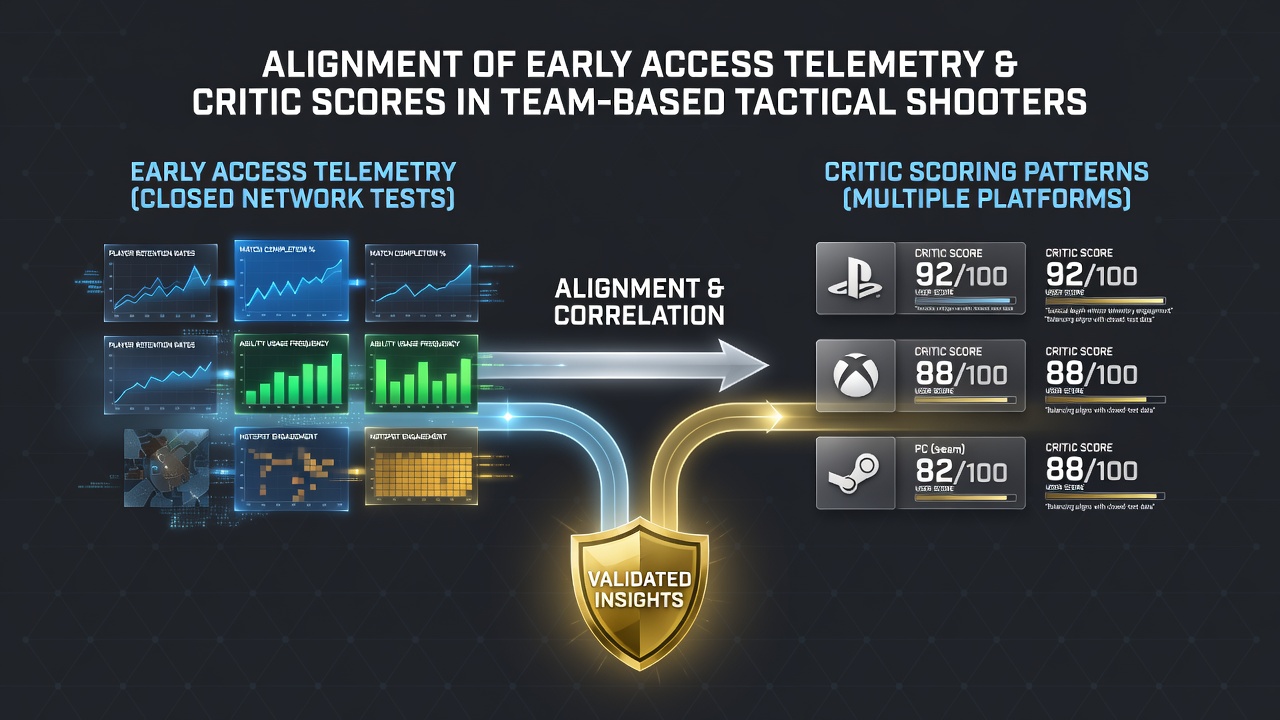
How Early Access Telemetry from Closed Network Tests Aligns with Critic Scoring Patterns in Team-Based Tactical Shooters on Multiple Platforms
Closed network tests in team-based tactical shooters generate telemetry that developers track through metrics such as session duration, objective completion rates, and communication frequency, and these data points frequently correspond to the numerical scores critics assign after launch on platforms including PC, PlayStation, and Xbox consoles.
Analysts at research institutions have compiled datasets from titles released between 2022 and 2026 that show consistent overlaps between pre-release player behavior logs and aggregated review outcomes, particularly when tests involve balanced team sizes and restricted map rotations.
Telemetry Metrics Captured in Closed Tests
Developers record variables like kill-death ratios adjusted for role, average time to first engagement, and squad coordination indicators during these limited sessions, and the patterns that emerge often mirror the aspects critics later evaluate such as balance and pacing. Data collected across multiple regions indicates that higher engagement in objective-based modes during tests tends to predict stronger critic reception for gameplay depth once the full version reaches wider audiences.
Platform-specific differences appear when console controllers introduce input latency compared with mouse-and-keyboard setups on PC, yet studies reveal that teams adjust their strategies accordingly and the resulting telemetry still tracks with final scores issued by reviewers who test across hardware configurations.
Correlation Patterns Observed Across Releases
Figures from industry reports demonstrate that tactical shooters exhibiting stable win-rate distributions in closed networks receive critic aggregates within a narrow band on sites that compile professional evaluations, whereas titles showing volatile team performance data often land lower. One dataset covering European and North American launches highlighted how communication telemetry, measured through voice chat participation, aligned closely with praise for cooperative mechanics in post-launch reviews.
Researchers tracking releases scheduled near October 2026 note that developers who iterate on test feedback before opening broader betas achieve tighter alignment between internal metrics and external scoring, especially when cross-platform parity receives attention during the closed phase. This process involves comparing PC-centric data with console telemetry to identify friction points that could affect accessibility ratings.
Platform Variations in Data Alignment
PC versions frequently yield denser telemetry due to higher player counts in tests, and this volume helps refine mechanics that critics score highly for tactical flexibility, while console data emphasizes controller precision and matchmaking speed. Evidence from multiplatform titles shows that when closed test logs reveal similar engagement curves across systems, aggregate critic scores tend to remain consistent rather than diverging by hardware.
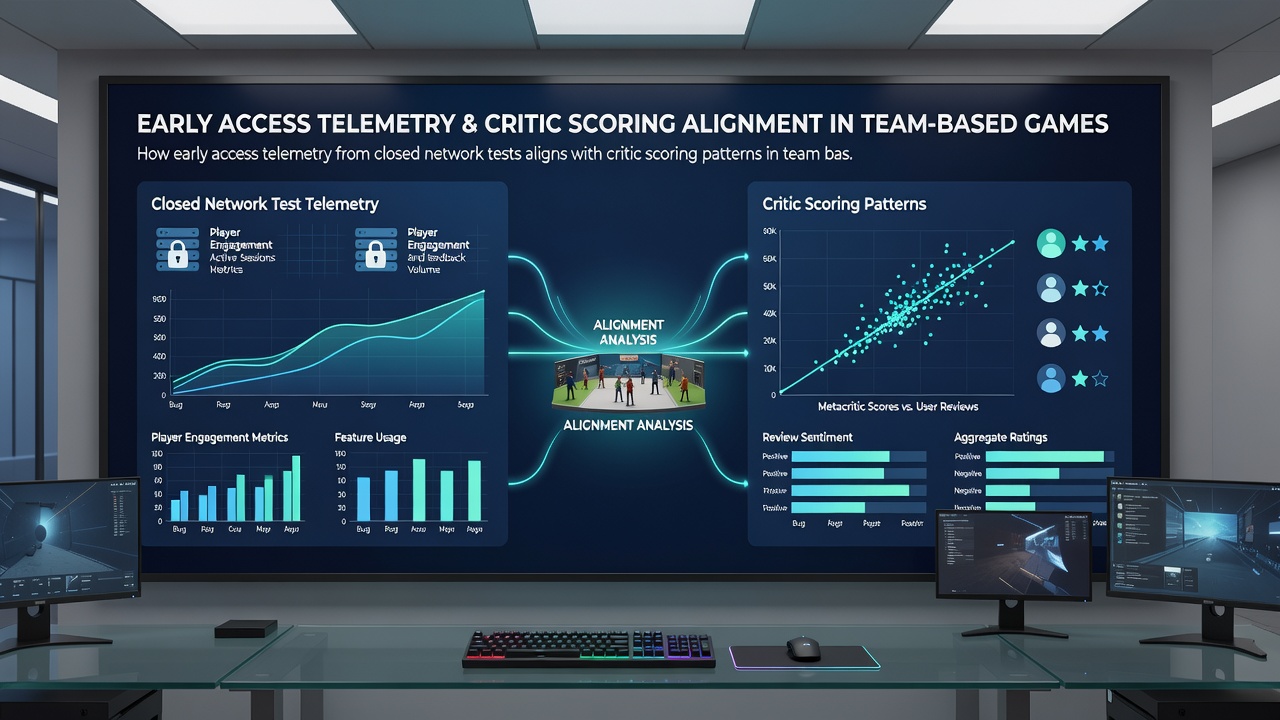
Observers examining Australian and Canadian market data have identified that regional player pools in closed tests produce telemetry reflecting local playstyles, which in turn corresponds to how critics from those areas weight certain features in their evaluations. The alignment strengthens when developers publish transparency summaries that connect test outcomes to subsequent patches.
Case Examples from Recent Tactical Shooters
Titles such as updated entries in established competitive series demonstrate how early kill-assist distributions and map control statistics from closed sessions foreshadow critic commentary on strategic layers, with scores reflecting the degree of refinement applied before release. Data indicates that when telemetry shows rapid player adaptation to new operators or gadgets, professional reviews often highlight those elements as strengths across platforms.
Academic analyses of live-service tactical shooters further reveal that retention signals gathered during restricted tests, including repeat login rates and mode preference shifts, track with long-term critic reassessments that occur months after launch when balance updates roll out.
Conclusion
The correspondence between closed network telemetry and critic scoring patterns in team-based tactical shooters continues to inform development cycles on PC and consoles, as aggregated data from multiple sources provides measurable indicators that developers use to calibrate features ahead of wider distribution. This relationship holds across regions and hardware types when metrics focus on objective engagement and team dynamics rather than isolated performance spikes.