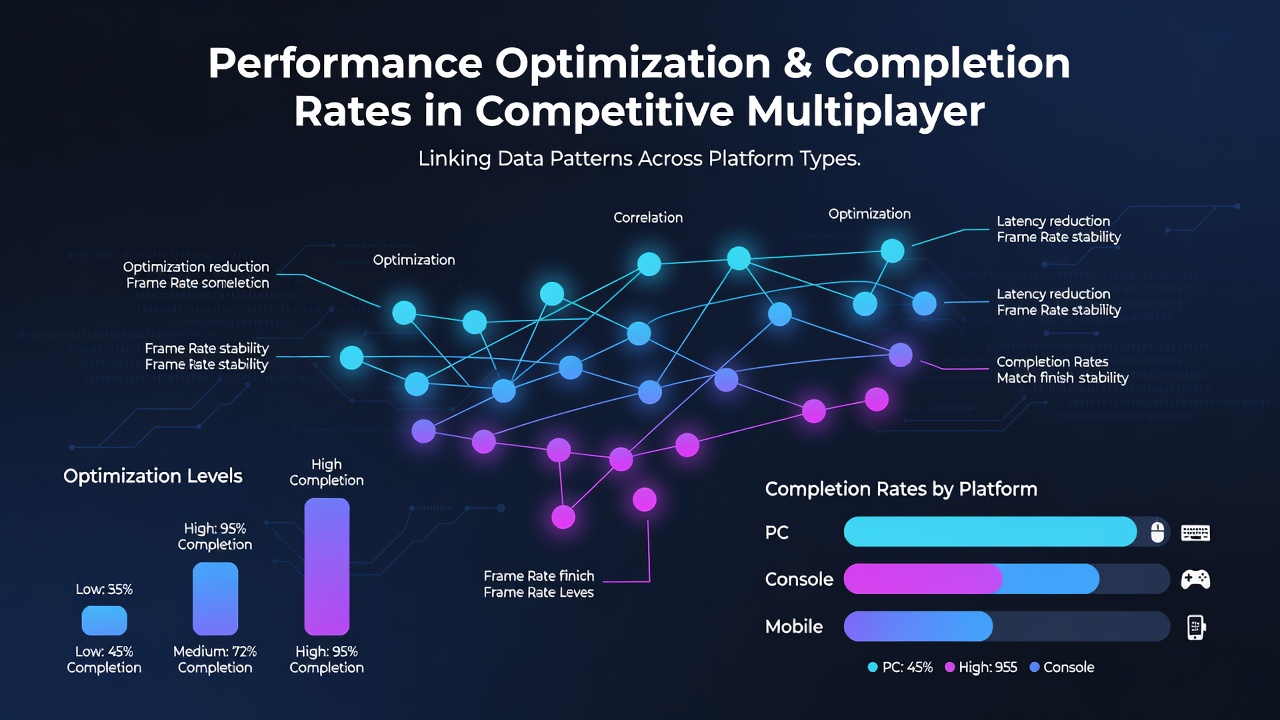
Data Patterns Linking Performance Optimization Levels with Completion Rates in Competitive Multiplayer Experiences Across Platform Types
Researchers have tracked connections between performance optimization factors such as stable frame rates, reduced input latency, and efficient memory usage and the rates at which players complete competitive matches in multiplayer titles across personal computers, consoles, and handheld devices, while data collected through platform telemetry systems reveals consistent trends that vary by hardware category and network conditions.
Platform-Specific Optimization Trends
Competitive multiplayer games on personal computers often show higher completion percentages when graphics settings maintain 60 frames per second or above with minimal drops during intense action sequences, whereas console versions on current-generation hardware demonstrate similar patterns once developers apply targeted patches that address thermal throttling and memory allocation. Mobile platforms present a distinct profile because variable refresh rates and battery constraints influence how optimization levels affect session endings, and figures from industry monitoring services indicate that titles optimized for 120 hertz displays on flagship devices record completion rates several percentage points above those on mid-range hardware running the same software at lower settings.
Cross-platform comparisons highlight that players on high-end PCs complete ranked matches at rates that align closely with console users who benefit from console-specific optimizations, yet discrepancies emerge when network latency combines with frame-time inconsistencies across these environments. Observers note that in November 2026 fresh telemetry datasets released by platform holders allowed analysts to isolate these variables more precisely than earlier aggregate reports had permitted.
Key Performance Factors and Completion Data
Load time reductions below five seconds correlate with increased likelihood of players finishing full competitive rounds rather than dropping out during matchmaking or early stages, and this relationship holds across shooter, strategy, and battle arena genres examined in multi-year platform studies. Input lag below 30 milliseconds pairs with higher retention through match end phases, while optimization that keeps CPU and GPU utilization balanced prevents the frame pacing issues that previously led to early exits in high-stakes tournaments.
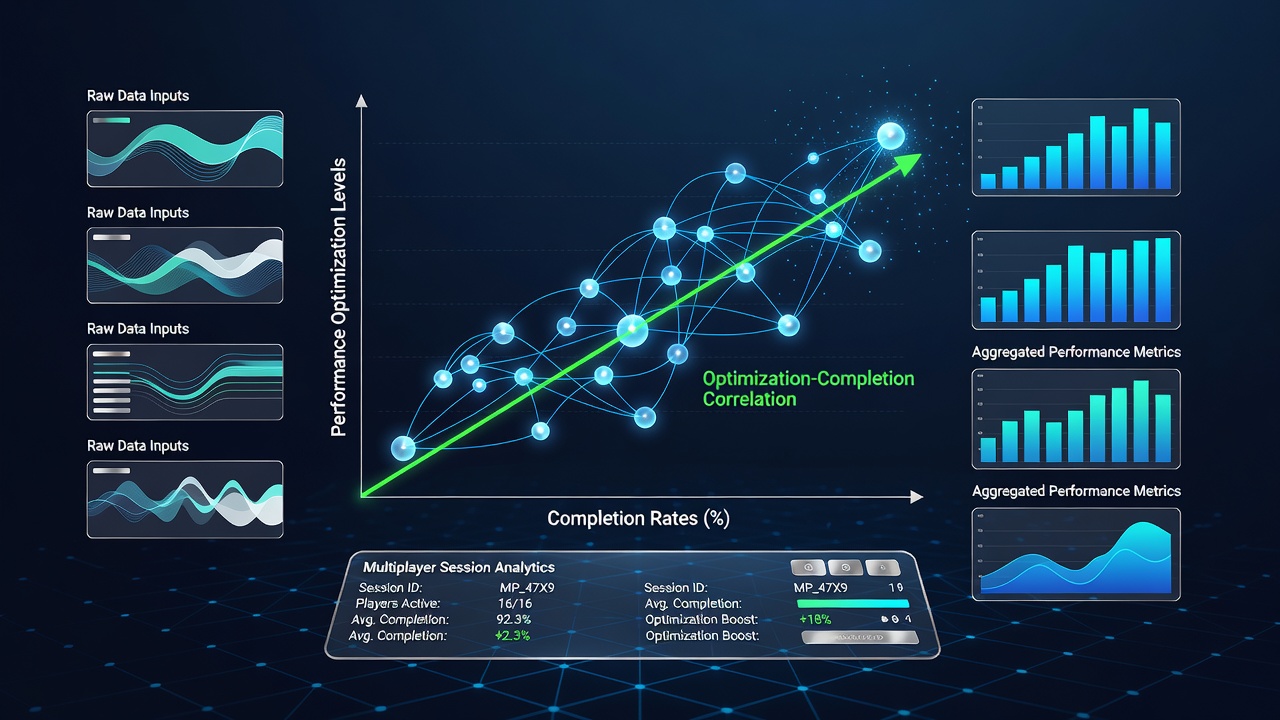
According to the Entertainment Software Association's 2026 report on gameplay metrics, titles that achieved consistent optimization benchmarks across updates recorded aggregate completion improvements of up to 12 percent on consoles compared with prior unoptimized builds. A separate analysis from the Canadian Interactive Digital Software Association examined regional data and found parallel gains on personal computers when developers prioritized network synchronization alongside visual performance.
These patterns appear because players encounter fewer interruptions that break concentration, and completion metrics rise when the game maintains responsiveness even under peak server loads during evening hours in major time zones. Data sets collected from millions of sessions show that optimization shortfalls on older hardware generations produce steeper drops in completion rates than equivalent shortfalls on newer devices equipped with better thermal management.
Genre and Regional Variations
Battle royale experiences display stronger sensitivity to frame rate stability than team-based arena games, since open-world movement and long-range engagements amplify the effects of stuttering or pop-in artifacts that optimization addresses. Fighting game communities on consoles report completion rates that track closely with input buffer optimization, while mobile versions of the same franchises show completion tied more directly to download size reductions and background process management.
Regional server performance adds another layer, because optimization that accounts for packet loss in high-traffic areas produces measurable completion lifts in Asia-Pacific markets compared with European and North American figures where infrastructure differences alter the baseline. Analysts tracking seasonal updates note that patches released in late 2026 improved these metrics further on platforms that previously lagged in memory compression techniques.
Long-Term Platform Comparisons
Longitudinal data spanning multiple console generations indicates that performance optimizations introduced midway through a title's lifecycle produce completion rate recoveries that bring older hardware users closer to parity with flagship device owners. Personal computer ecosystems benefit from driver-level updates that deliver similar gains without requiring full game patches, although the distribution of these improvements varies with graphics card adoption rates across player bases.
Handheld platforms continue to show the widest gaps between optimized and unoptimized states, because thermal and power limits create ceilings that developers must navigate through scalable rendering pipelines. Completion statistics collected through unified tracking systems allow direct comparisons that reveal how these hardware realities shape player behavior across ecosystems.
Conclusion
Telemetry patterns demonstrate that performance optimization levels connect directly to completion rates in competitive multiplayer settings, with the strength of these connections differing by platform type, genre demands, and regional infrastructure. Continued monitoring through 2026 and beyond provides clearer visibility into how targeted engineering choices influence session outcomes across the competitive landscape.